Quick, Easy, Essential: The Role of the California Mastitis Test in Udder Health
What is California Mastitis Test (CMT)?
The CMT is a simple, rapid, and cost-effective method used to detect mastitis.
It provides immediate results and helps identify infections early, allowing farmers and veterinarians to take prompt action. Because it’s easy to use, it’s ideal for monitoring of udder health. It also supports more targeted treatments and promotes a rational use of antibiotics.
CMT helps to maintain milk quality, improves animal health and welfare, and reduces production losses.
Reasons to use CMT:
-
-
- It detects subclinical infections.
- It can be performed at milking time, gives instant results and is inexpensive.
- It helps to identify infected quarters and select them for milk sampling collection for microbiology.
-
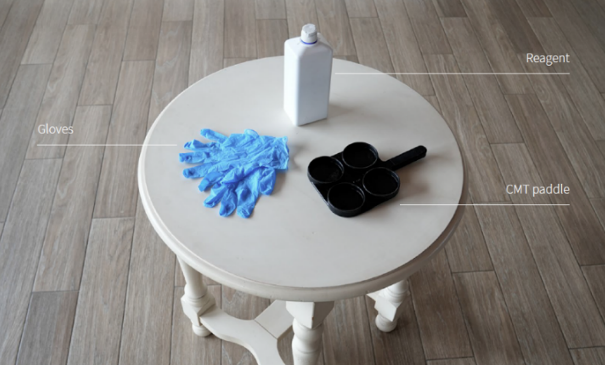
What do we need?
-
-
- Reagent: a solution that breaks down the somatic cells and causes the DNA to form a gel-like consistency.
- CMT Paddle: A plastic paddle with four wells, one for each quarter. Clean it thoroughly between animals to avoid cross-contamination.
- Disposable Gloves: Essential for maintaining good hygiene and biosecurity during testing.
-
Steps to follow
1. Discard some strips of milk: This removes any debris or bacteria that may be present in the teat canal and ensures a more accurate result.
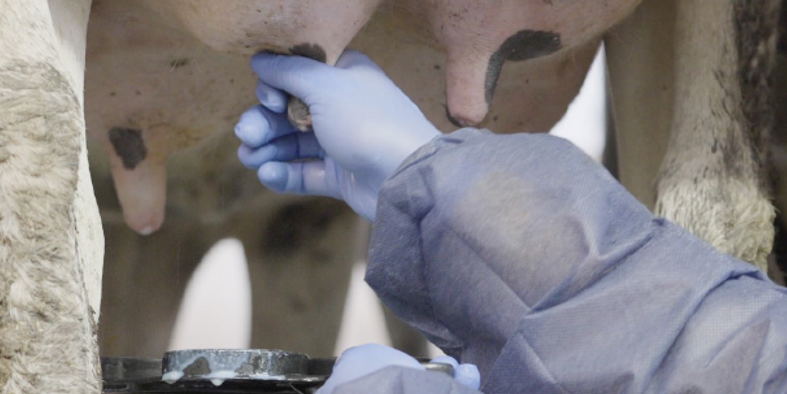
2. Collect Milk Samples: Strip each quarter 3–4 times into the corresponding circle of the paddle. Be careful to avoid cross-contamination.
3. Add CMT reagent equal to the retained milk: The volume of reagent should match the amount of milk in each well to ensure proper reaction.
4. Gently Rotate the paddle for 10-15 seconds
Interpretation of results
After swirling the milk and reagent mixture, observe the consistency and texture in each well.

Negative
- The mixture remains liquid and smooth, it flows easily.
- Healthy quarter with no signs of mastitis
Weak Positive
- The mixture begins to thicken and forms a soft gel.
- Slightly elevated SCC. This could indicate a mild or early-stage infection. Monitor this quarter or retest soon.
Positive
- The mixture thickens immediately and forms a jelly-like consistency.
- High SCC . This suggests subclinical or clinical mastitis, and further investigation or treatment is recommended.
Conclusions
The CMT is a valuable, simple, on-farm tool for the early detection and monitoring of mastitis.
Incorporating CMT into routine farm management ultimately supports better milk quality, animal health and welfare, and overall productivity.